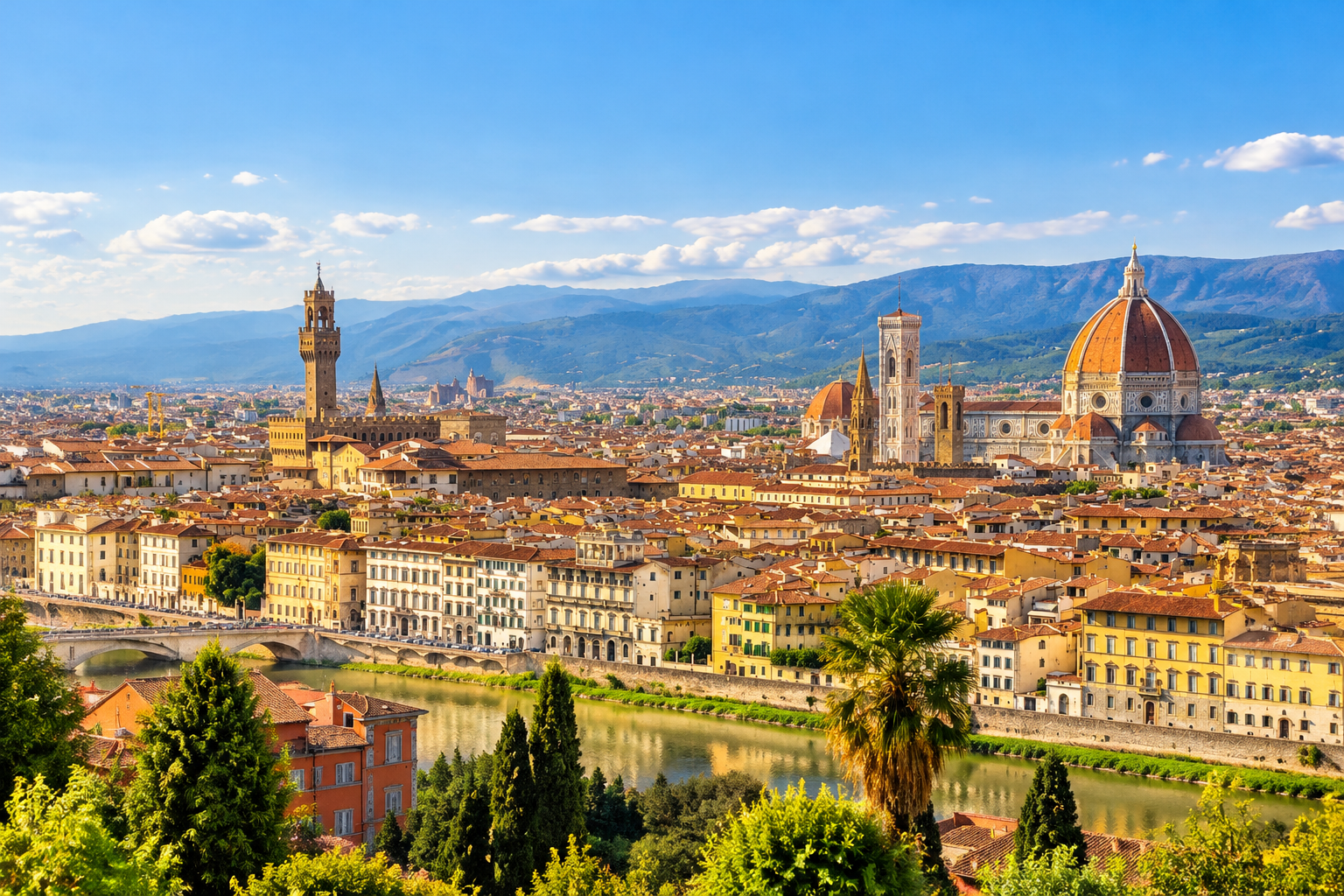
Firenze
Thursday, April 22 to Tuesday, April 29
Benvenuti a Firenze!
The birthplace of the Renaissance and the last stop on our Italian adventure. We’ll spend five nights in Florence, where Michelangelo, Botticelli, and the Medici left their mark on every street. Everything is a short walk, so we’ll take it one neighborhood at a time, with a day out in the Chianti hills for wine, views, and a long Tuscan lunch.
Save room in your suitcase. Florence is the place to shop!
Rinascimento, Giorno per Giorno
-
Midday: Arrive at Santa Maria Novella station, then a 5 to 15 minute walk or taxi to the apartment.
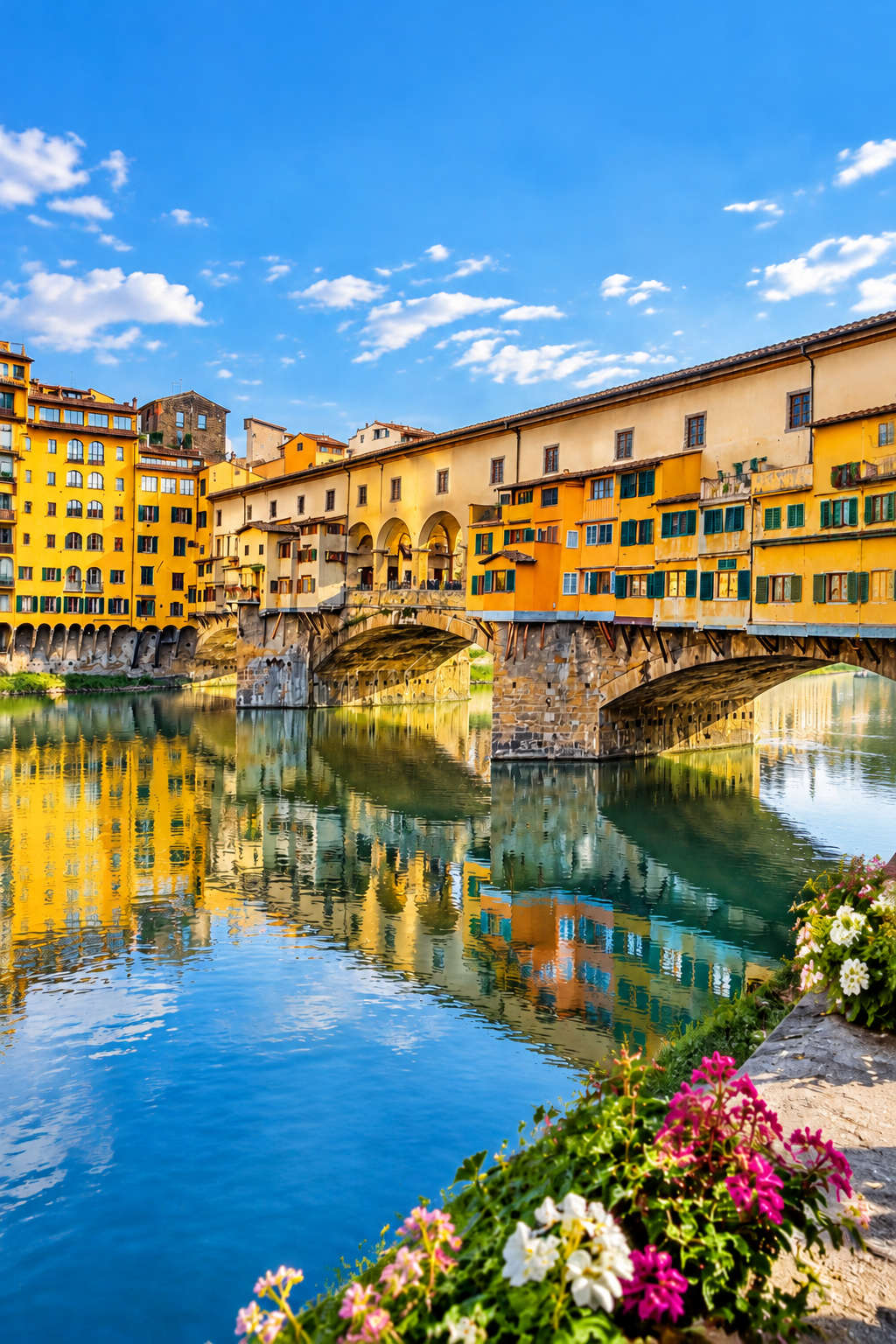
Late afternoon: Ray’s walking tour past the Duomo and Piazza della Signoria, ending on Ponte Vecchio at golden hour.
Dinner: TBD
-
7:50 AM: In line at the Accademia for the first 8:15 AM slot to see David (about 1 hour).
About 9:30 AM: 7 minute walk to the Medici Chapels (about 45 min) and the Basilica di San Lorenzo next door.
Lunch: At Mercato Centrale, 2 minutes away.
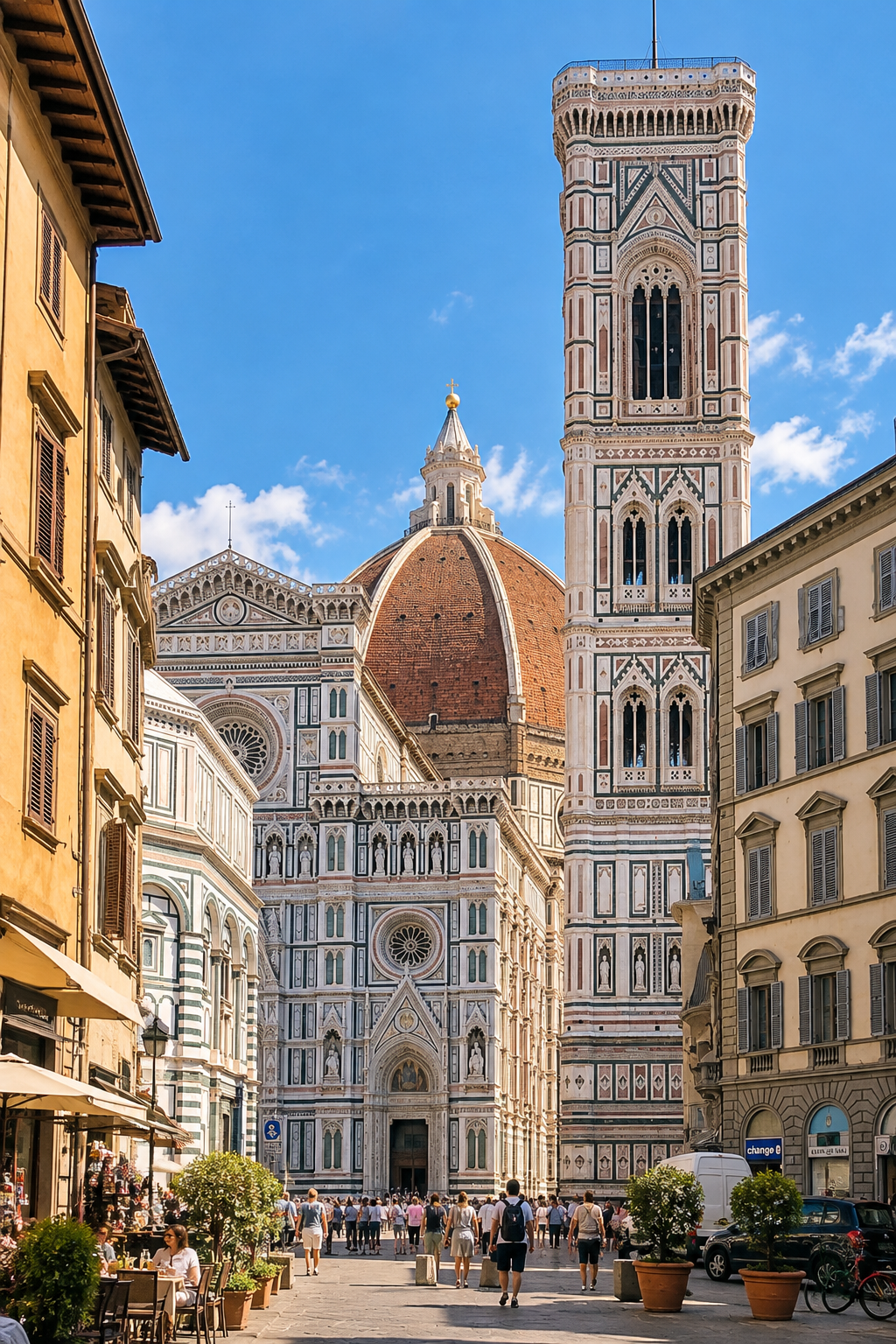
Afternoon: 5 minute walk to the Duomo and Baptistery. Climbers take their timed dome slot (Brunelleschi Pass) or climb the bell tower (Giotto Pass). The cathedral itself is free.
Dinner: Trattoria Sostanza, 7:30 or 9:00 PM seating. Famous for its butter chicken and bistecca.
Ticket tip: A 72-hour museum pass covers the Accademia, Medici Chapels, Bargello, and three smaller museums. Start it with David on Friday morning, and it runs through Monday morning. It only beats single tickets if we add the Bargello on Saturday.
-
Morning: Santa Croce (about 45 min), where Michelangelo, Galileo, and Machiavelli are buried, and the Leather School behind it (free to browse).
Lunch: La Ghiotta or SchiacciaMatta (lunch only).
Afternoon, pick and choose:
The Bargello for Donatello’s bronze David (free with the pass).
An Uffizi highlights tour for Botticelli and da Vinci.
Santa Maria Novella church and the Officina Profumo-Farmaceutica next door, one of the oldest pharmacies in the world.
Piazza della Signoria and a wine window hunt.
Dinner: Il Pizzaiolo
-
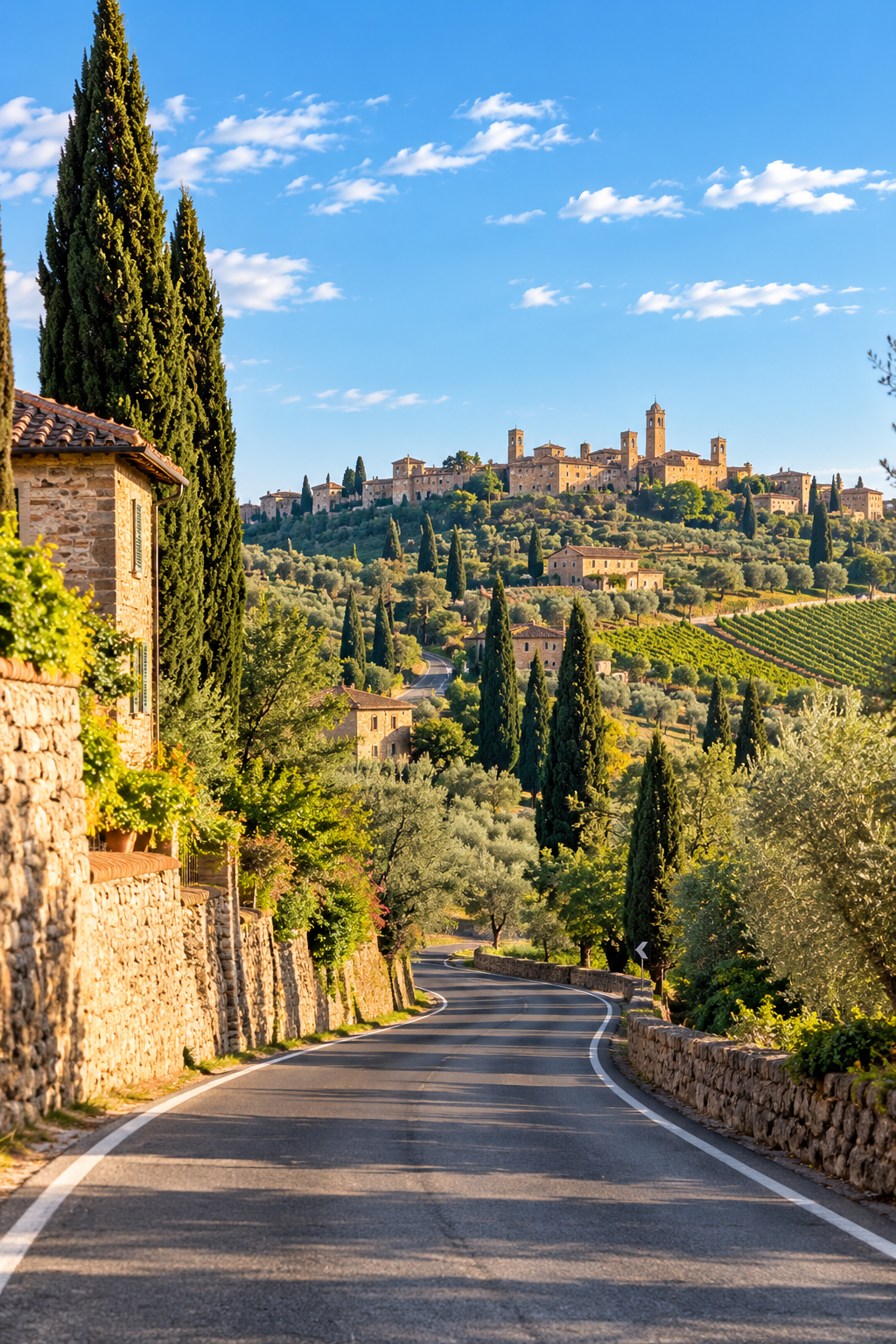
April 25 is Liberation Day, a national holiday, and the city will be packed. We’re escaping to the hills!
About 9:00 AM: Our private driver picks us up.
The route: Montefioralle (about 45 min from Florence), Greve (5 min), then Panzano and the Conca d’Oro overlook (15 min).
Lunch: La Toppa in San Donato in Poggio.
Afternoon: Castellina in Chianti, then back to Florence (about 1 hour).
Evening: An easy aperitivo and a light dinner near the apartment.
Heads up: Many family-run shops and smaller wineries will be closed for the holiday, so our driver will pre-book every tasting and lunch.
-
Item descriptionAbout 9:30 AM: Coffee in Piazza Santo Spirito, then the antique shops, artisan workshops, and a few wine windows nearby.
About 11:00 AM: Wander west along Borgo San Frediano, another street of artisan shops, which ends right at Sabatino.
11:45 AM: In line at Trattoria Sabatino before it opens at noon. No reservations, and the line builds fast!
Afternoon: Rest, shopping, or a stroll past Palazzo Pitti.
About 7:15 PM: Walk up to San Miniato al Monte (25 to 30 minutes uphill from Ponte Vecchio, or a short taxi) for sunset around 8 PM. The monks often chant at vespers.
Farewell dinner: TBD
-
About 9:30 AM: Leave for the airport (about a 20-minute drive) for our 12:20 PM flight home.
Alla Fiorentina
-
Leather: Florence is the place. Skip the cheap stalls and head to the Scuola del Cuoio, the Leather School behind Santa Croce, where artisans have been training since after World War II. You can watch them work. It’s right on our Saturday route.
Marbled paper: A true Florentine craft. Giulio Giannini e Figlio near Palazzo Pitti has been making marbled paper and leather-bound journals since 1856. Perfect for our Monday in the Oltrarno.
Perfume, soaps, and potpourri: The Officina Profumo-Farmaceutica di Santa Maria Novella started as a monks’ pharmacy in the 1200s. The shop alone is worth seeing, and the soaps make lovely gifts.
Gold jewelry on Ponte Vecchio: Goldsmiths have lined the bridge since the 1590s, when the Medici kicked out the smelly butchers. Even if you don’t buy, it’s fun to window shop.
Artisan pieces from the Oltrarno: Frames, ceramics, jewelry, and furniture restorers. Many have been working in the same little workshops for generations.
Chianti Classico and olive oil: Pick up bottles on our Chianti day. Look for the black rooster on the neck of the bottle, the sign of true Chianti Classico.
Cantucci: Tuscan almond biscotti, made for dunking in Vin Santo, the local dessert wine.
-
Cosa Mangiare | What to Eat
Bistecca alla fiorentina: Florence’s famous T-bone, sold by weight and served rare. Don’t ask for it well done. Big enough to share!
Ribollita: A hearty Tuscan soup of bread, beans, and greens. The name means “reboiled.”
Pappa al pomodoro: A thick tomato and bread soup. Tuscans waste nothing, especially bread.
Lampredotto: The adventurous one! A Florentine street food sandwich made from tripe, sold from carts around the city. Locals line up for it.
Schiacciata: Florence’s answer to focaccia, split and stuffed into big sandwiches. Expect lines at the famous spots.
Crostini toscani: Toast topped with chicken liver pâté. A classic Tuscan starter.
Tuscan bread: You’ll notice it has no salt. The story goes that it started during a salt tax or a blockade by rival Pisa centuries ago, and Florentines just never went back.
Gelato: Florence claims to have invented it, for the Medici court. Try the crema Buontalenti flavor, named after the man who supposedly created it.
Cantucci and Vin Santo: The classic Tuscan way to end a meal. Dip the biscotti in the wine.
-
Wine windows: Look for tiny arched doors in palace walls at hand height. They’re buchette del vino, where wealthy families sold wine straight from their cellars in the 1600s. A few reopened during COVID to sell wine, coffee, and gelato.
The Medici balls: The Medici coat of arms, a shield with red balls, is everywhere: on churches, palaces, and doorways. Start counting and you won’t be able to stop.
The red lily: Florence’s symbol, the giglio, shows up on flags, manhole covers, and souvenirs all over town.
Il Porcellino: A bronze wild boar at the Mercato Nuovo. Rub his shiny snout and put a coin in his mouth so it falls through the grate, and you’ll return to Florence.
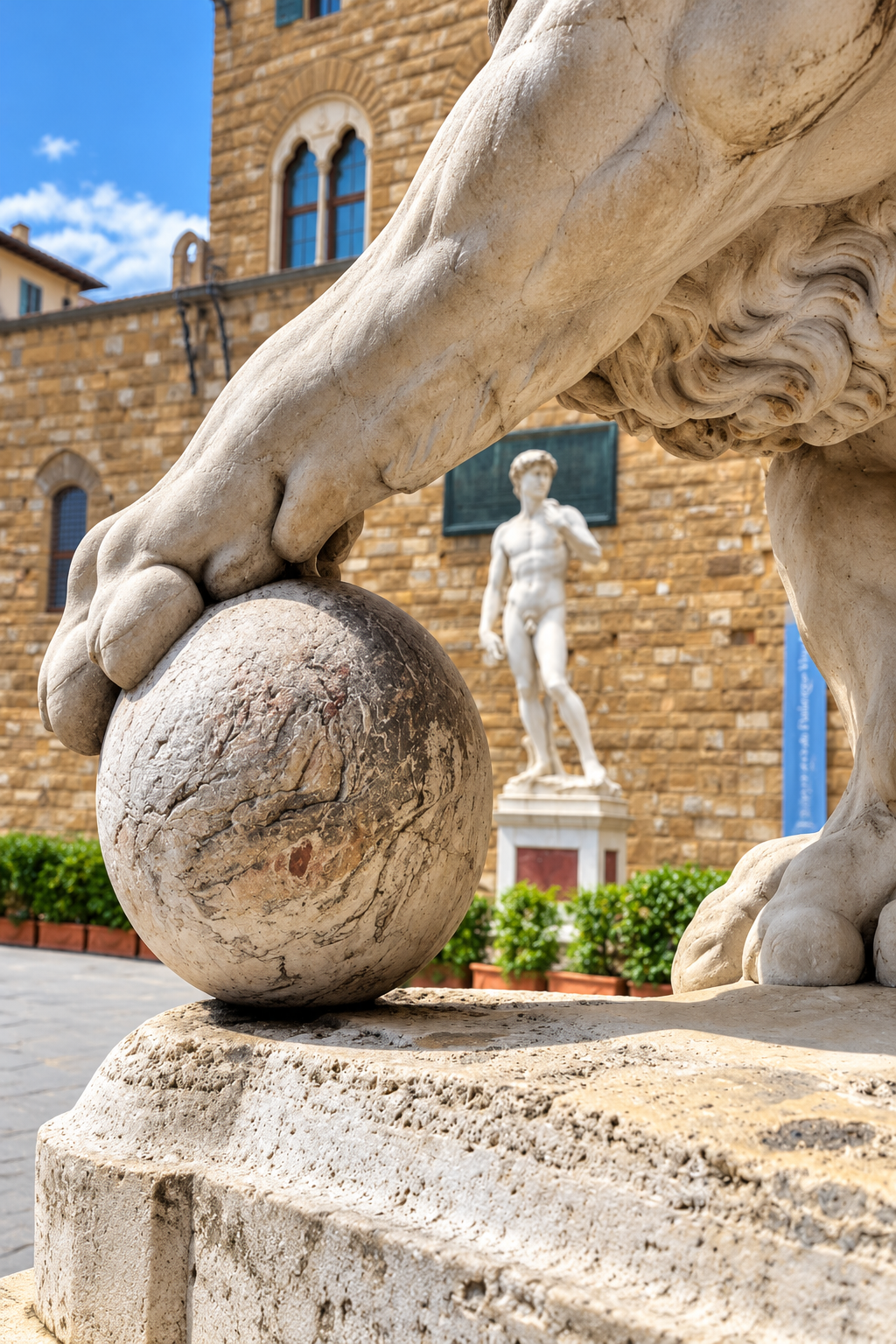
David is everywhere: The David in Piazza della Signoria is a copy. The original was moved into the Accademia in 1873 to protect it from the weather.
The Vasari Corridor: Look up as you cross Ponte Vecchio. That long covered walkway on top of the shops was the Medici’s private passage between their palace and their offices, so they never had to walk among the people.
Ponte Vecchio survived: It was the only bridge in Florence the Germans didn’t blow up as they retreated in 1944.
The 1966 flood: Around Santa Croce, look for small plaques high up on the walls marking how high the Arno’s floodwaters rose. Some are over your head.
Brunelleschi’s dome: Still the largest brick dome ever built, finished in 1436. Nobody knew how he’d do it, and he kept his methods secret.
Michelangelo’s graffiti: On the wall of Palazzo Vecchio, look for a small face carved into the stone. Legend says Michelangelo carved it behind his back while listening to a boring man talk.
Clet’s street signs: Watch the “no entry” and other traffic signs. A local street artist sticks playful figures on them all over town.
Casa Dolce Casa (Home Sweet Home)
Placeholder for the Florence apartment: address, check-in time, and directions from Santa Maria Novella station.